
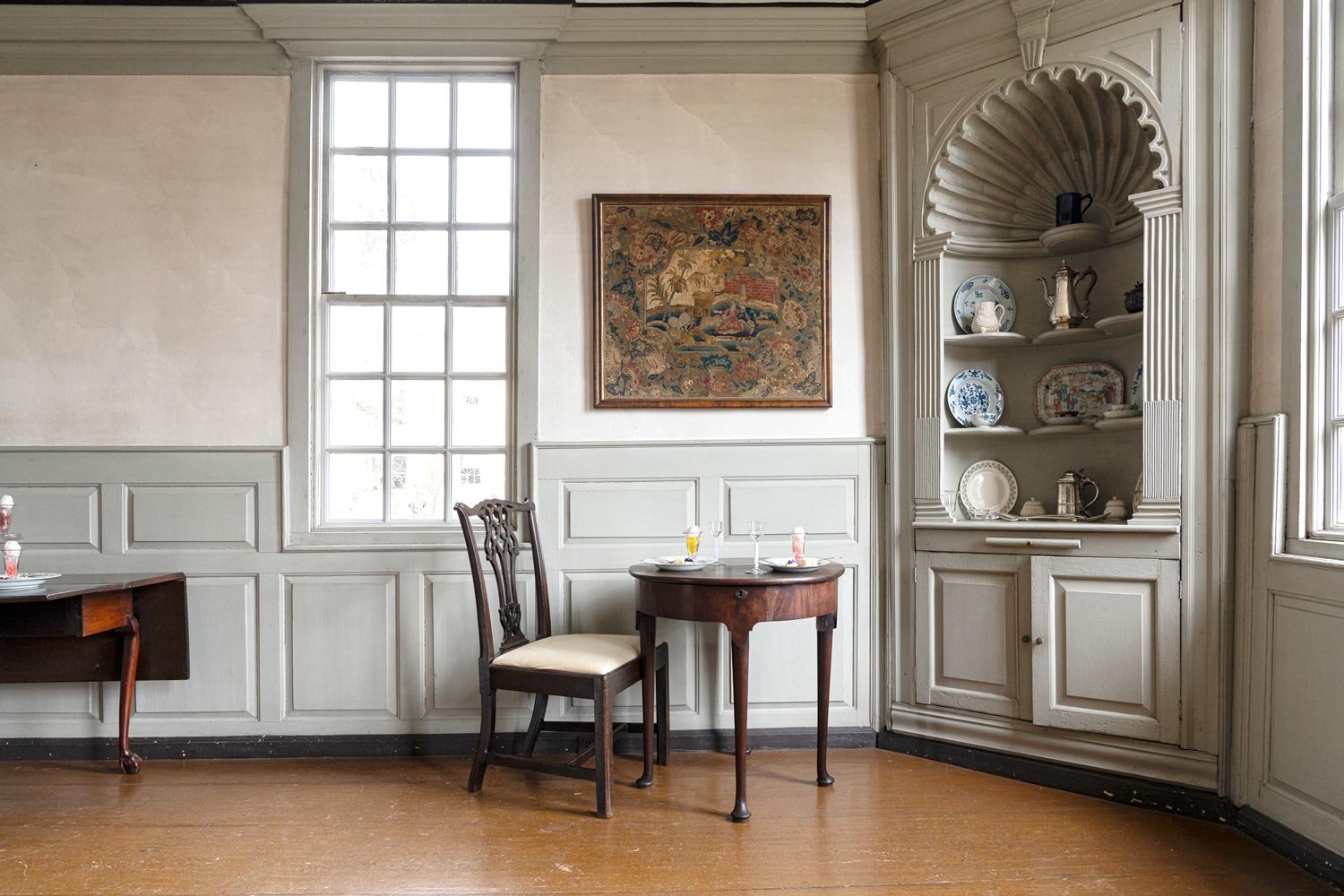
Tate House Collection
The Tate House Collection, built from generous gifts and purchases since 1935, represents a merchant-class household in colonial Maine. It comprises works on paper, furniture, other decorative arts, and furnishing and other textiles. The selection offered here provides a few highlights.
Photos by Ari Kellerman.
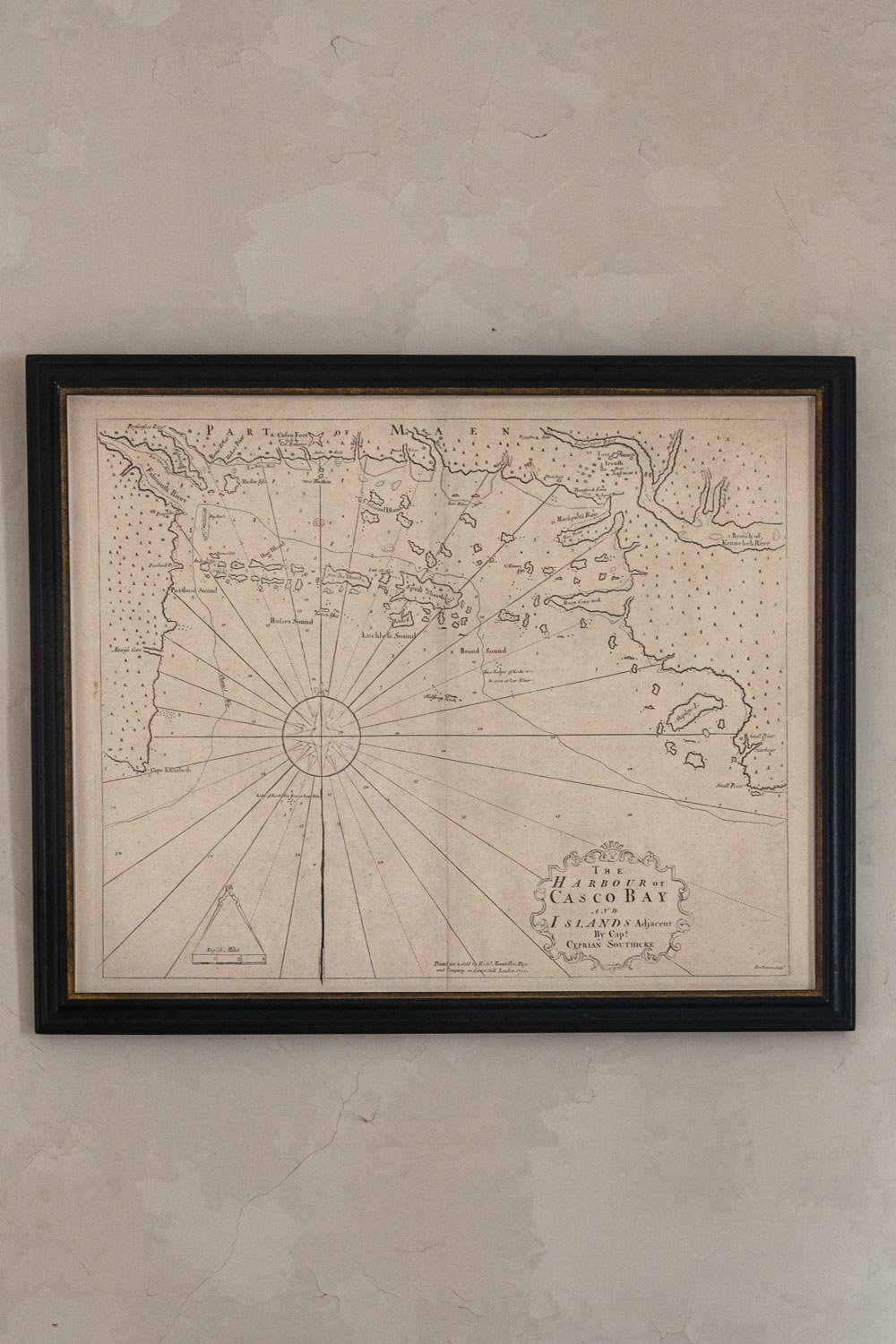
Cyprian Southack, "The Harbour of Casco Bay and Islands," 1720, engraving. Southack was an early explorer of Casco Bay in 1698. The map appeared in "The English Pilot, The Fourth Book," from 1721 until 1794.

William Hogarth, "Night," 1738, engraving and etching, A British painter, engraver and social critic, Hogarth created this print as part of his series "Four Times of the Day."
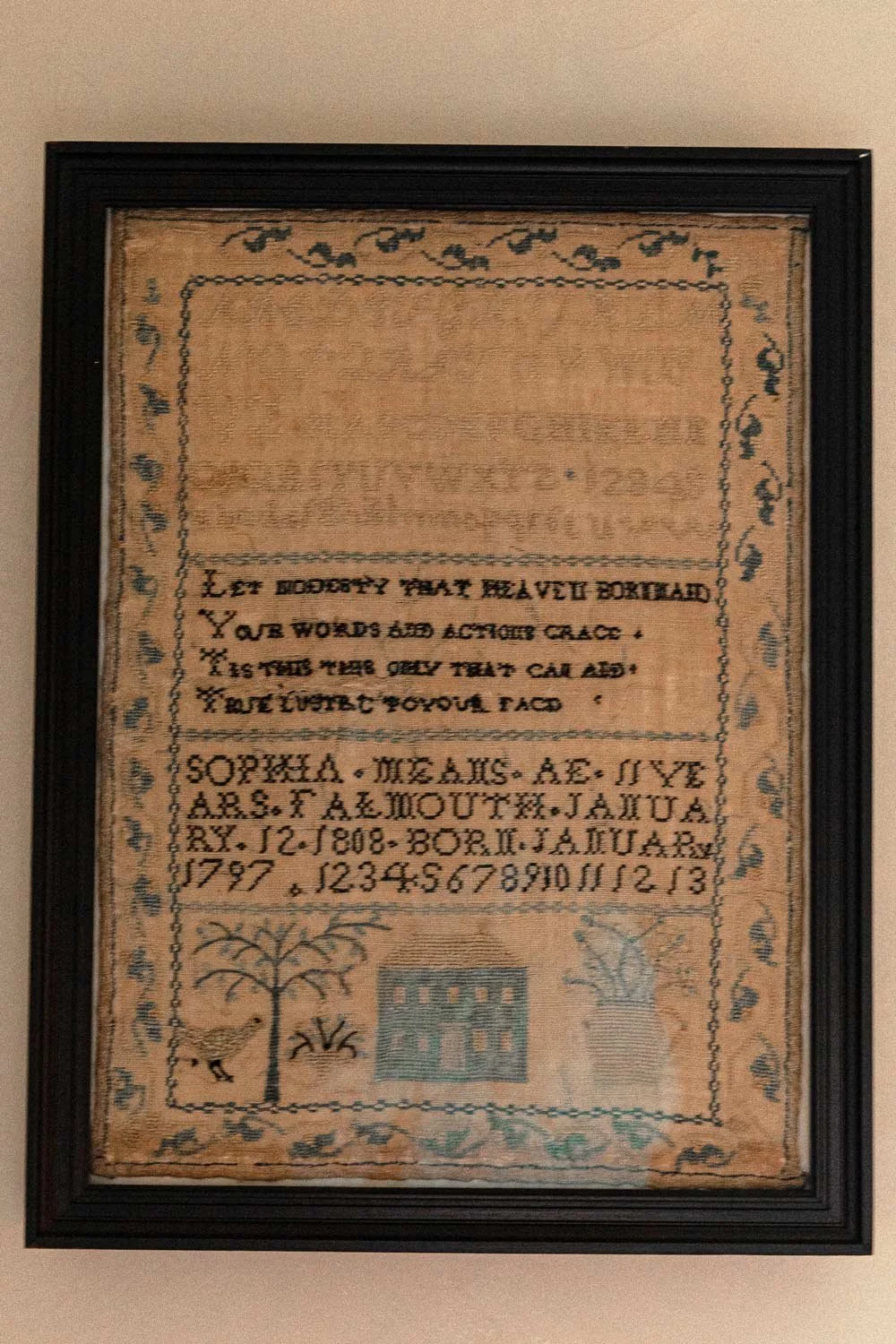
Sophia Means, "Marking Sampler," 1808, linen. Young girls learned basic sewing through marking samplers. Living across from Tate House in the Means House, eleven-year-old Sophia created this sampler as part of her school curriculum.
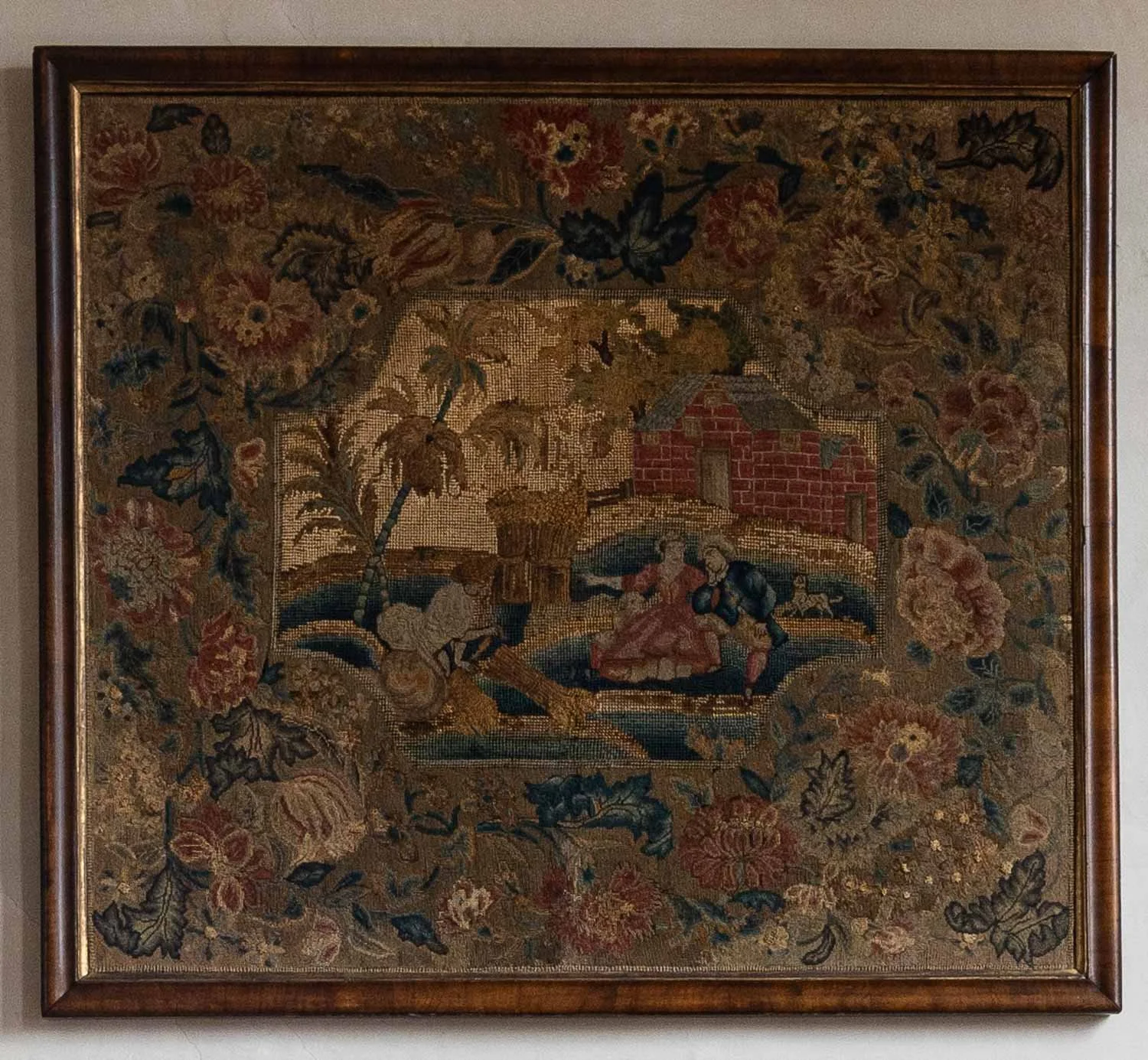
Unidentified artist, "Needlework tapestry," mid 18th c., wool and linen. Women of Mary Tate's class had time for leisure pursuits, such as ornamental needlework. The finely wrought English landscape scene is surrounded by a wide border of flowers, including tulips, pinks, and roses.

"Book of Common Prayer," London, 1760. As Anglicans, the Tate family would have referred to the Church of England's standard prayer book. This early edition is one of several 18th c. books found in the collection.
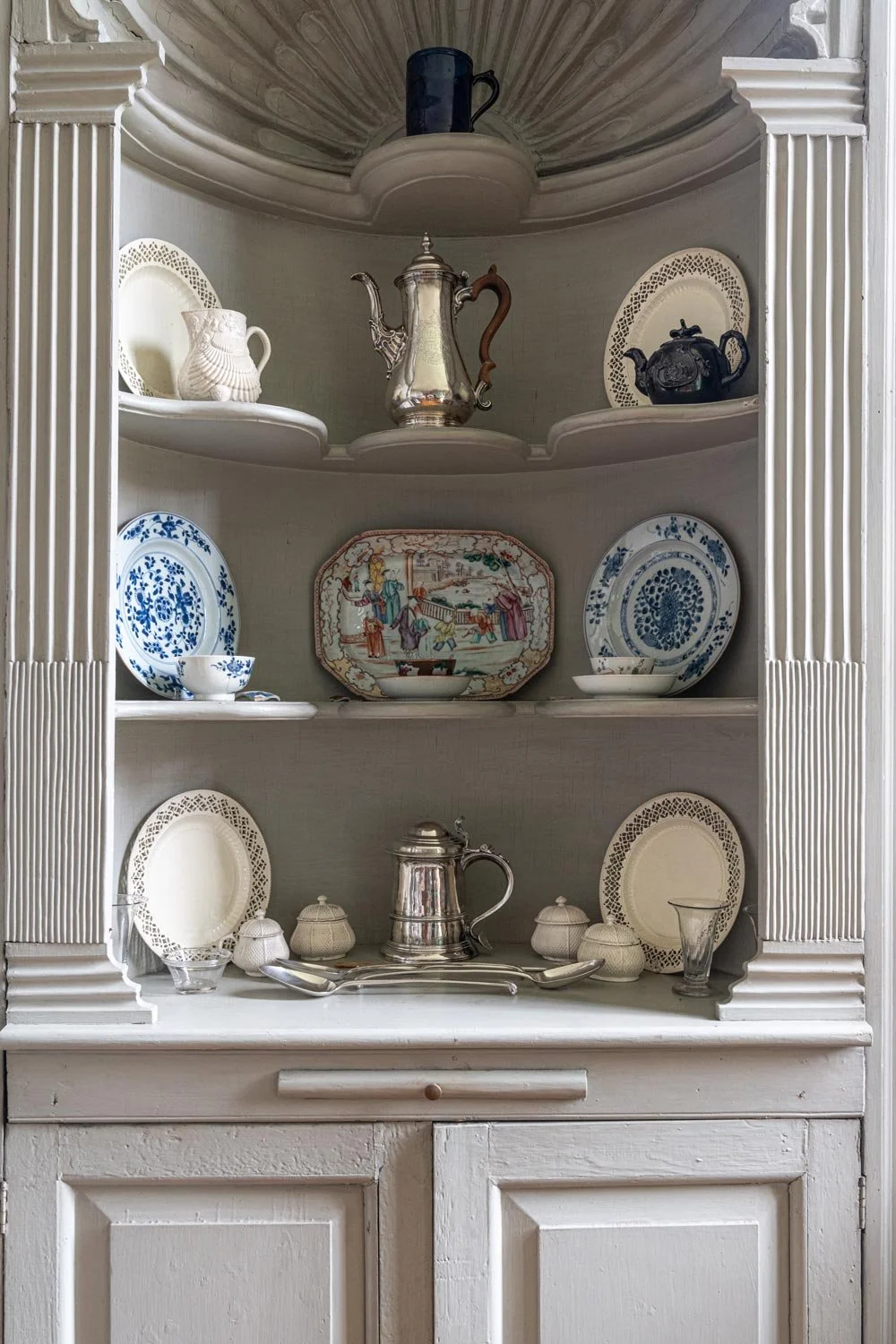
"Corner Cupboard or Bofat" (detail), 1755, reproduced 1935. Costly imported Chinese export porcelains, English silver, and blown English glass tablewares were stored in the best room's corner cupboard, also called a bofat, where they would be admired but out of harm's way.
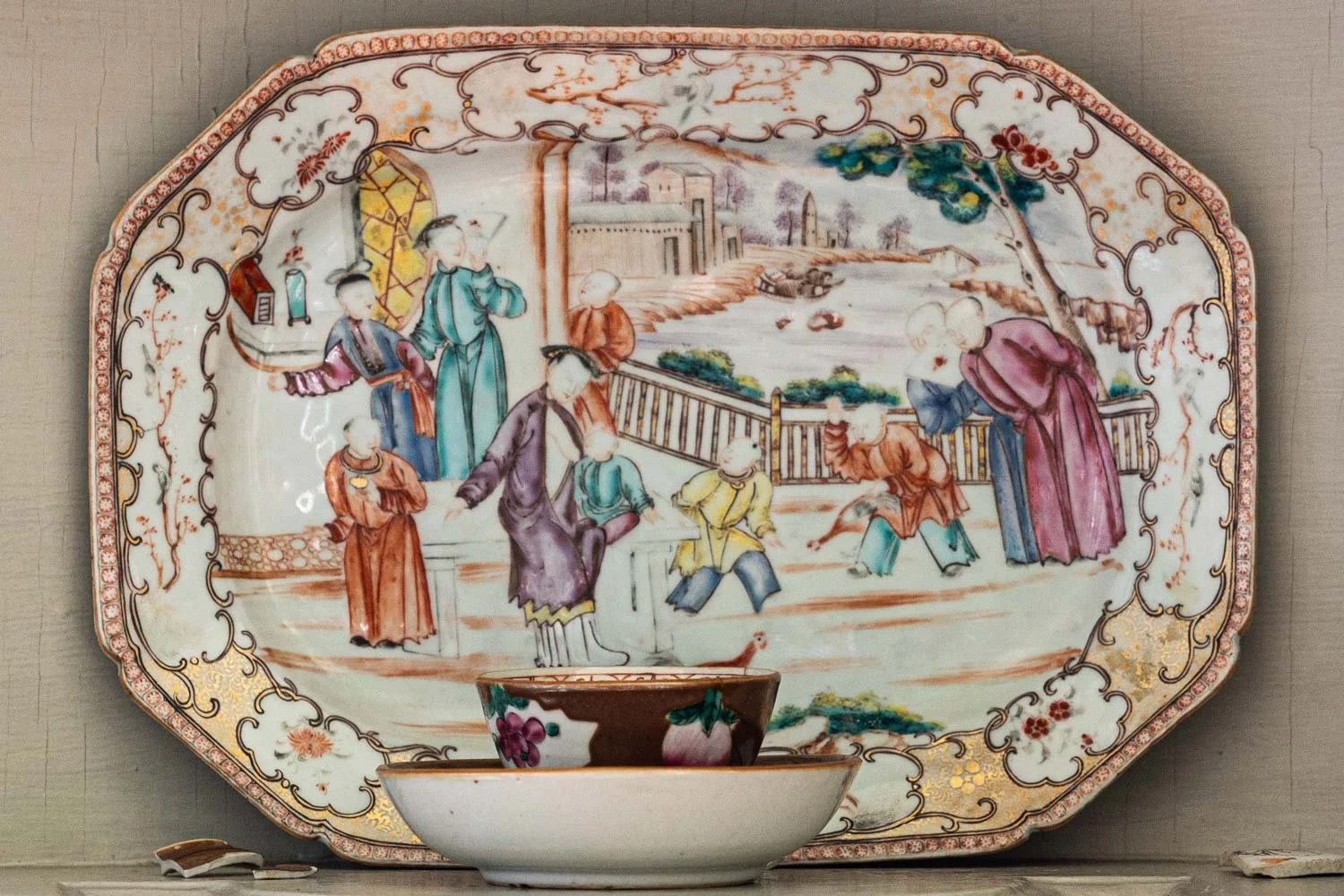
"Platter and teacup" (bofat detail), Chinese export porcelain, ca. 1760. The famille rose (polychrome) and Batavia-type (brown-glazed) decorations are known to have been used at Tate House and related shards have been recovered archaeologically.
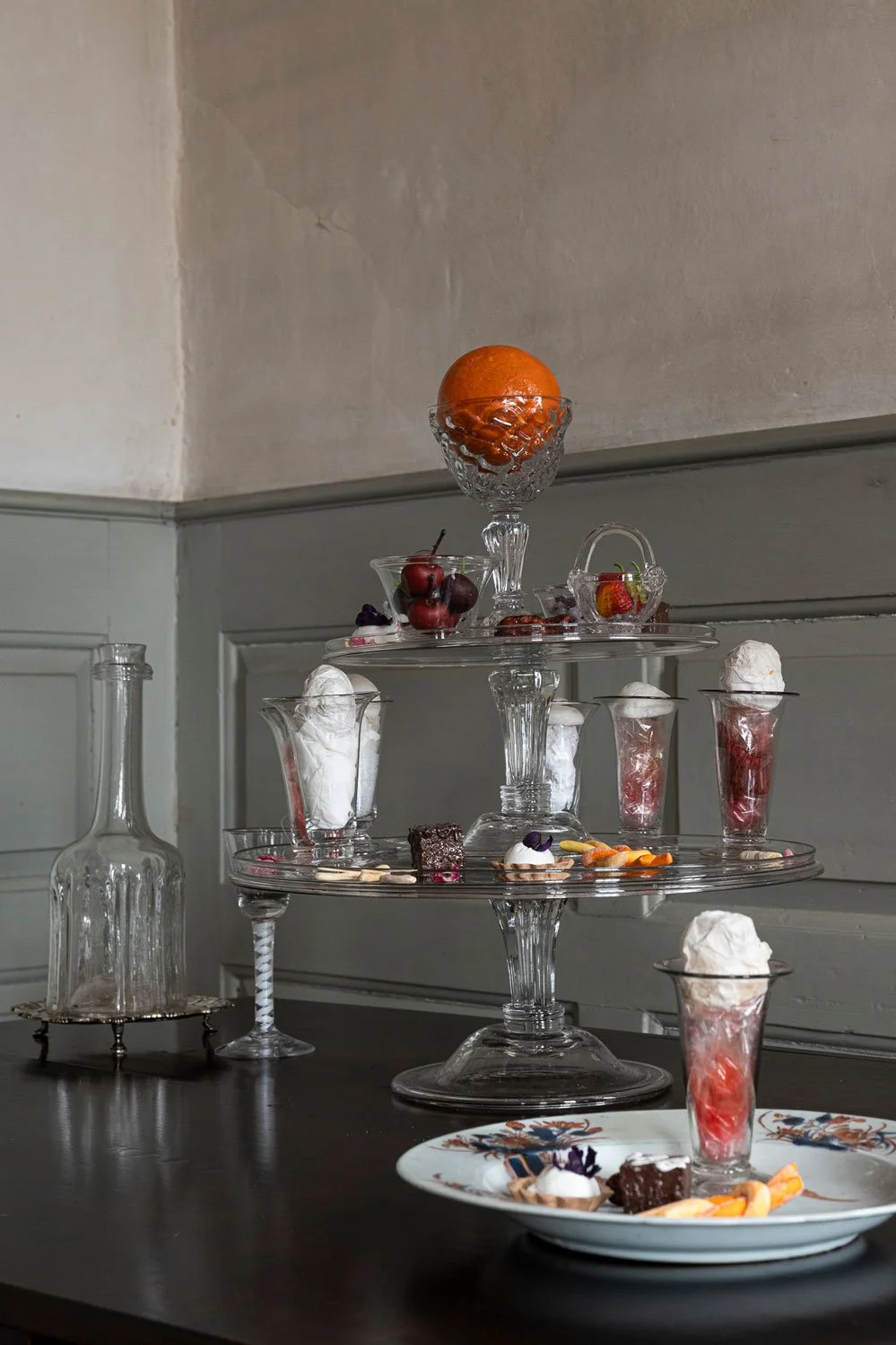
"English Dessert Pyramid" with table glass and Chinese porcelain, 1740-1760. A festive way to serve desserts in colonial America was a glass pyramid. It represents a social custom that was labor intensive and required many expensive imported ingredients.
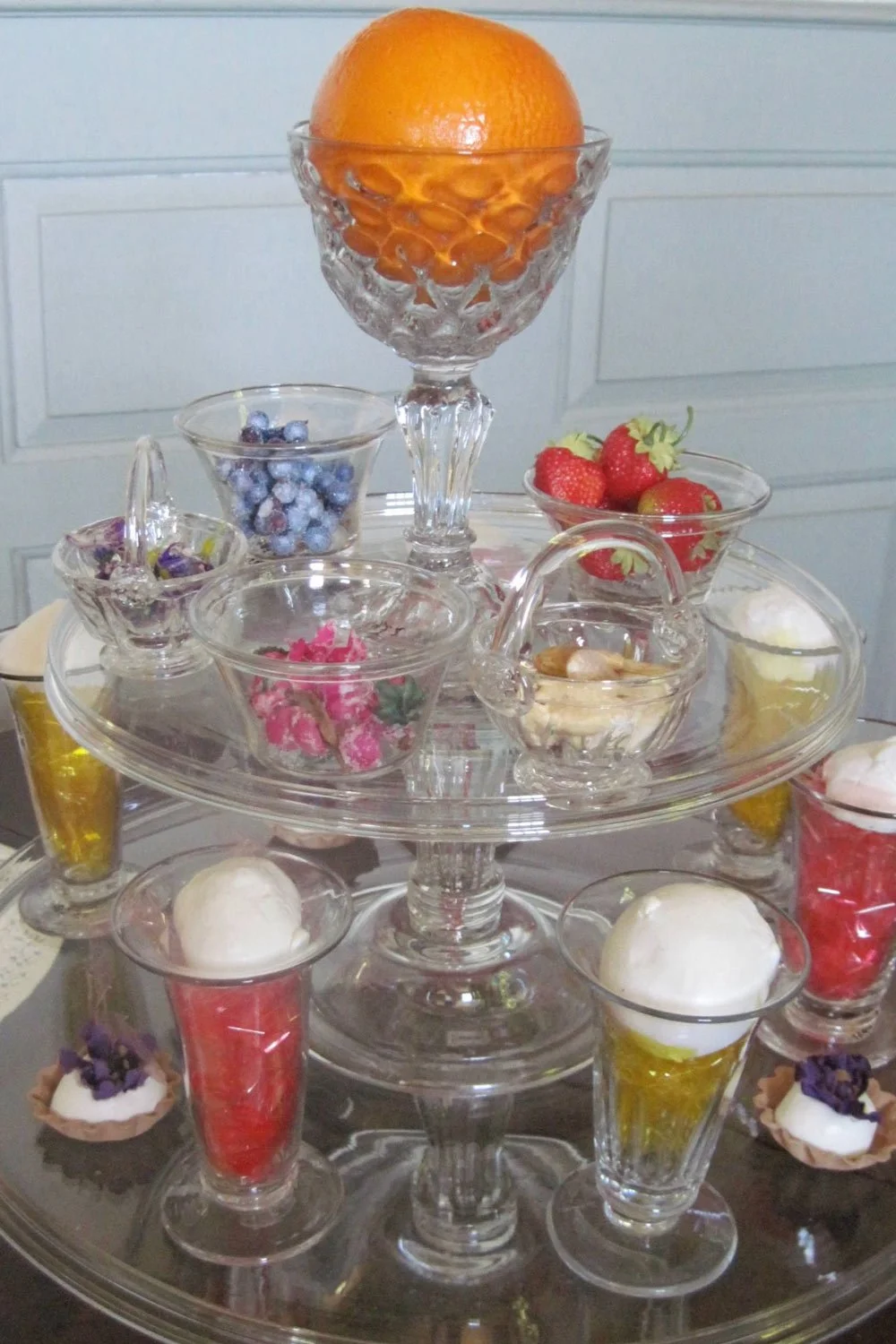
"English Dessert Pyramid," 1740-1760. This detail shows the myriad forms of blown glass made for this special purpose. Comprised of footed salvers of graduated size, handled baskets, patty pans, flared glasses, and topped by an orange glass, it held candied and preserved fruit and nuts, little cakes, sweetmeats, and jellies and syllabubs.

"Dessert plate," ca. 1760. Imported Chinese export porcelain and English glass were refined tablewares for dinner and other social activities. A typical dessert of syllabubs and sweetmeats is seen here.
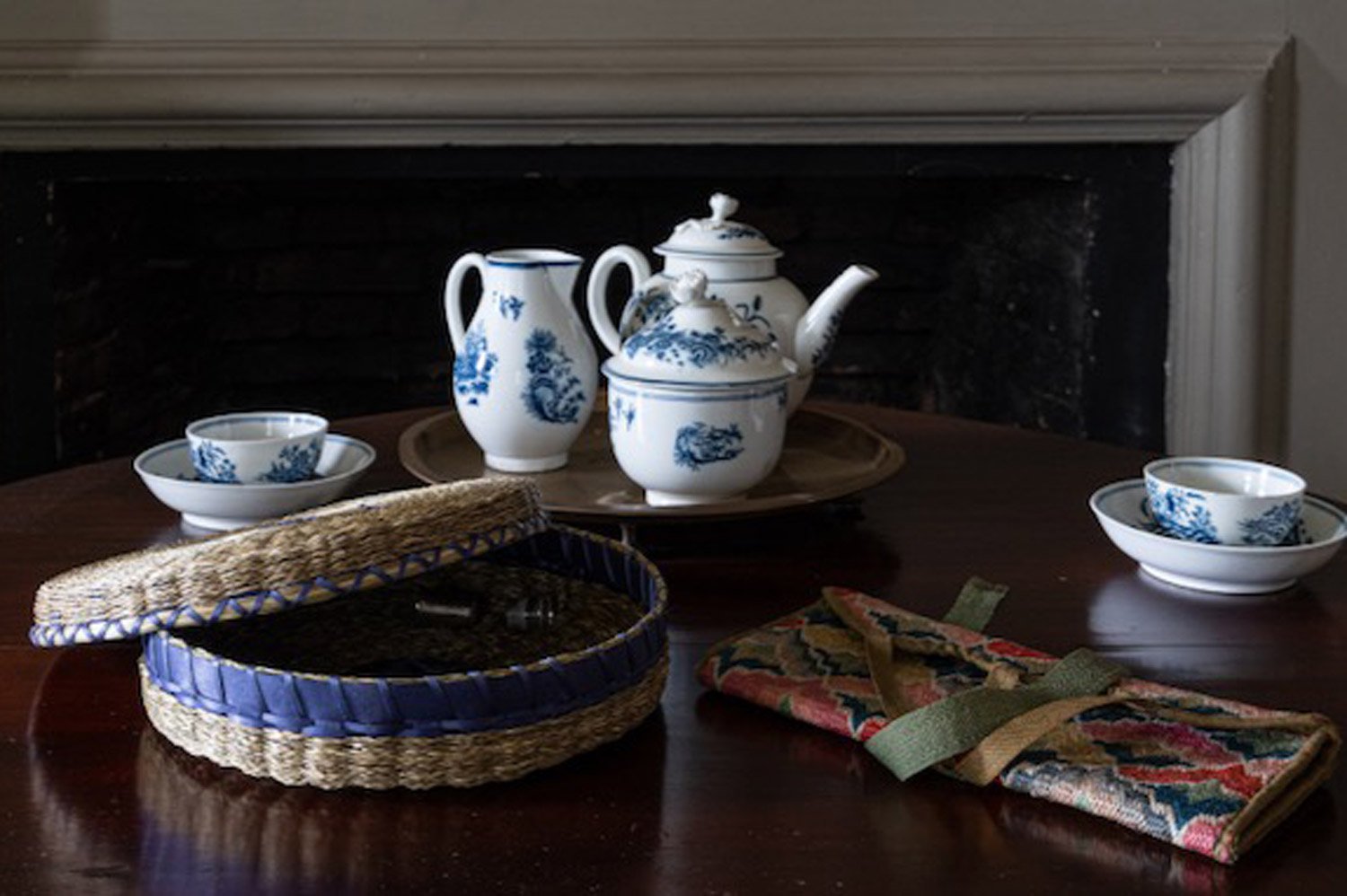
Tea table detail: Theresa Secord, Penobscot, "Basket," 2022, sweetgrass and ash splint; Worcester porcelain tea wares, soft-paste porcelain, ca. 1760; and American worked pocketbook, wool, ca. 1780
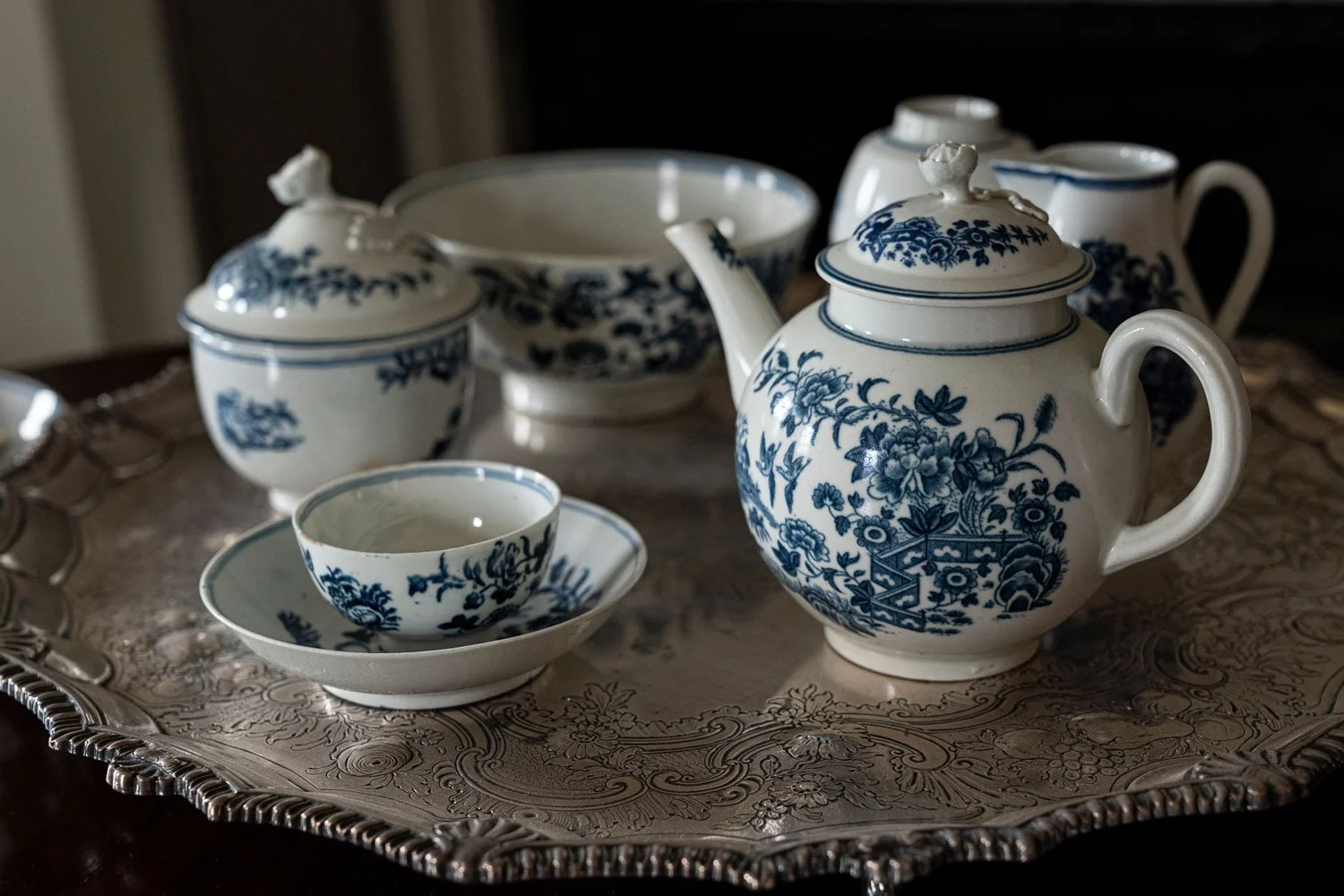
The Worcester Porcelain Company, founded in 1751, created luxury table and tea wares that made their way to colonial New England. The transfer-printed decoration in cobalt blue features a Chinoiserie or Oriental-inspired pattern popular in the 1760s.
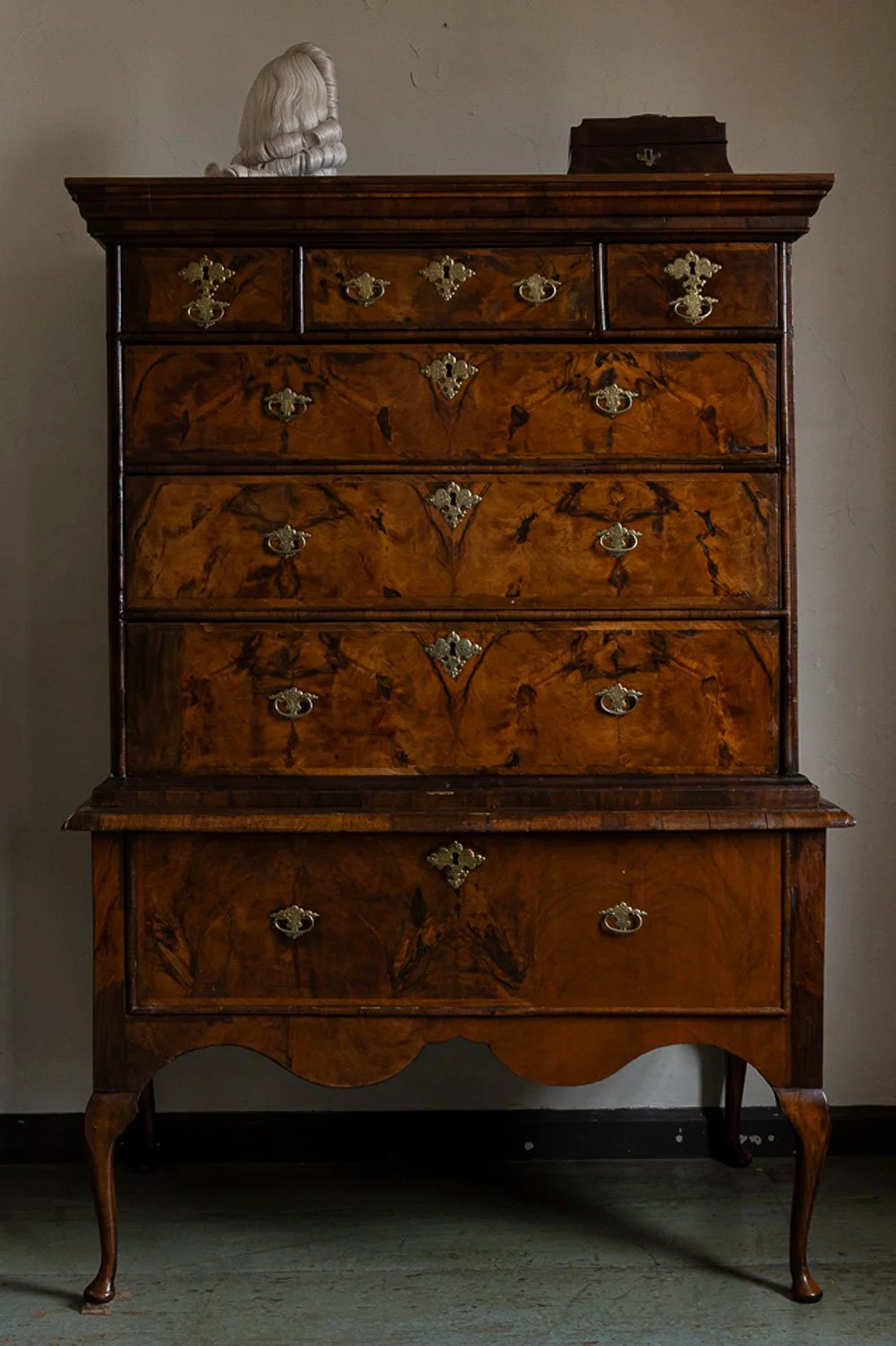
"English High chest," ca. 1740. Elegant high chests provide ample storage for household linens and clothing.
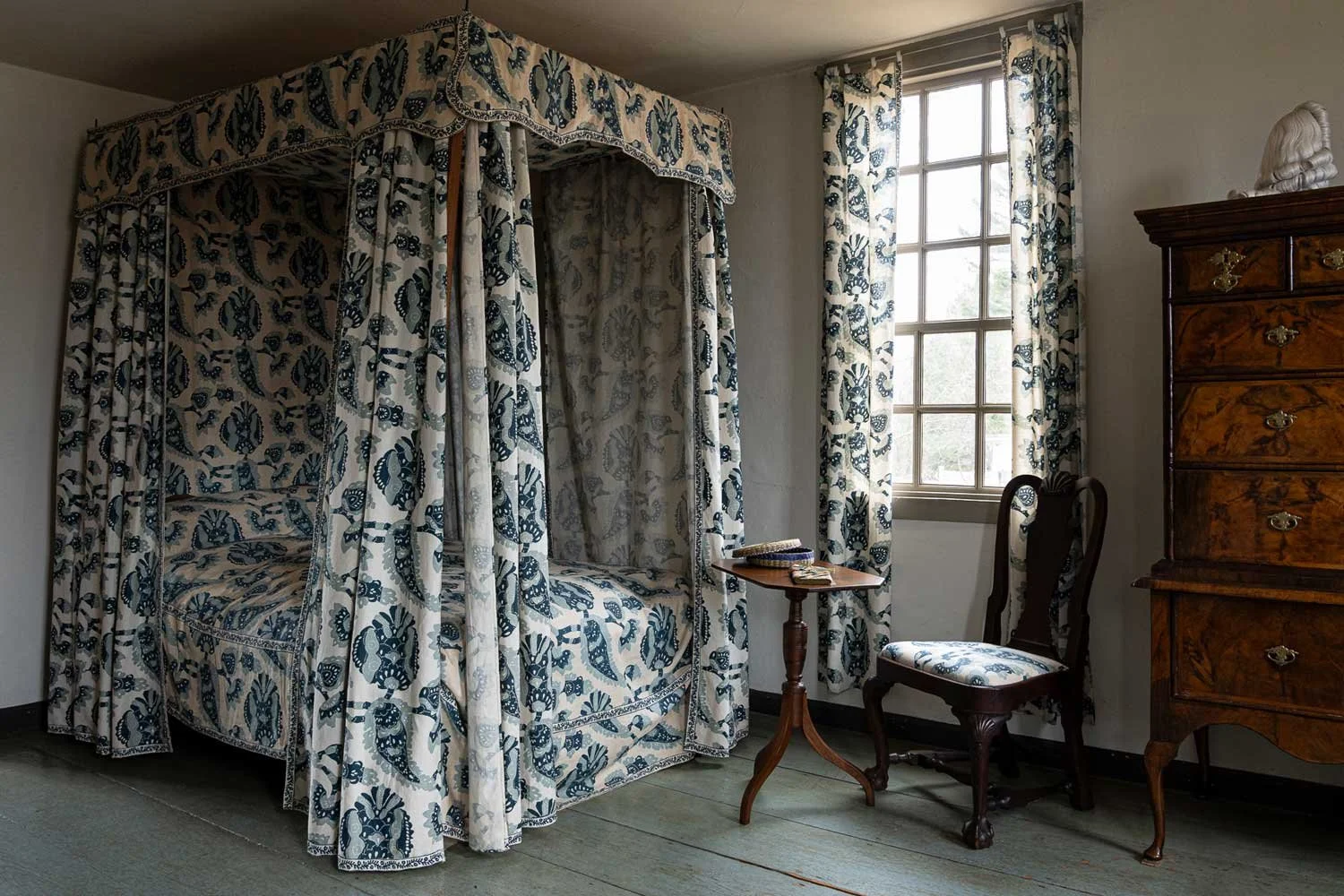
"High-post bedstead," ca. 1760. A bed fully draped with costly textiles was often the most expensive furnishing in a colonial household. The blue resist-dyed linen curtains were produced in 1966 and 2000 from an original example in the collection.
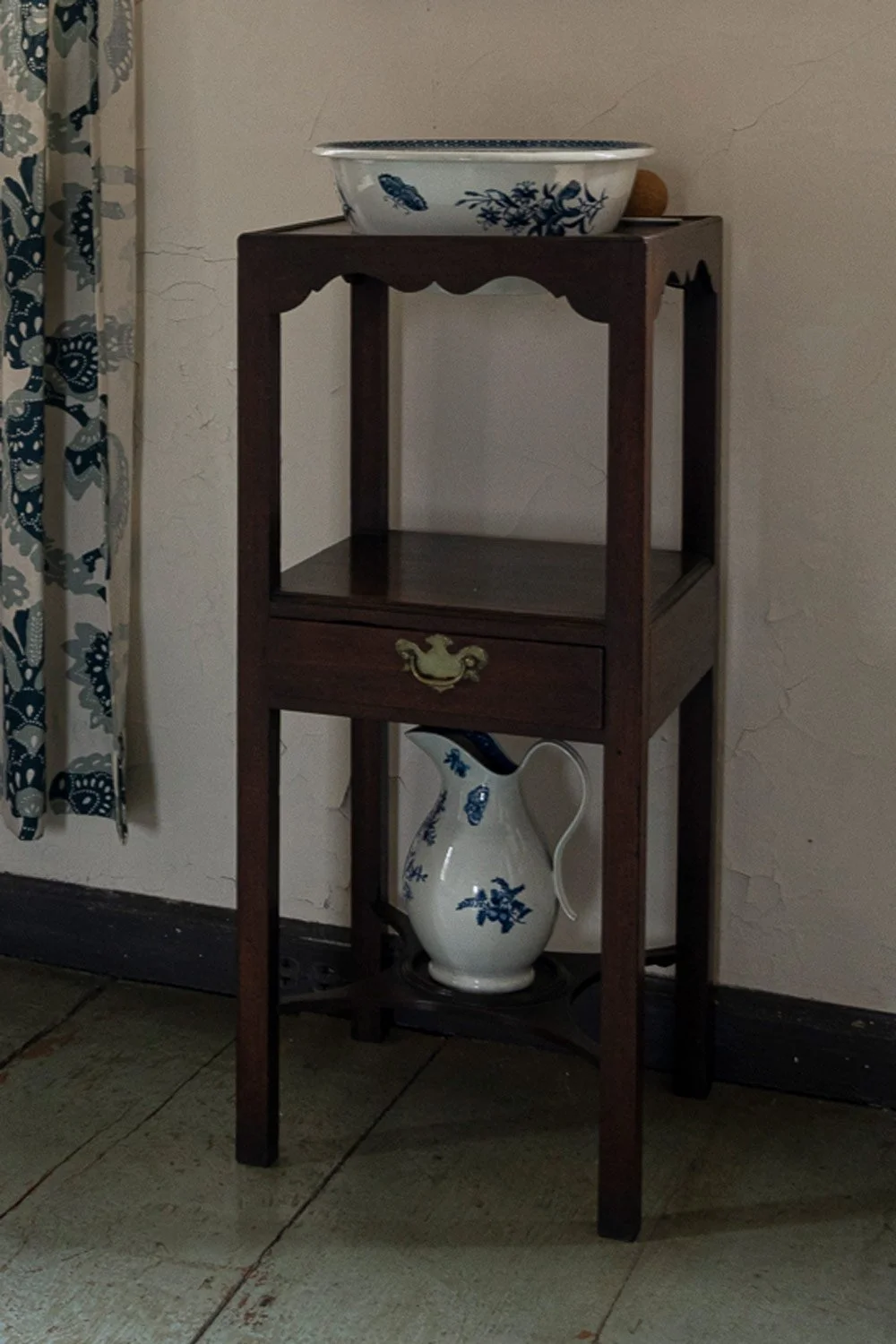
"English Washstand with Worcester porcelain ewer and basin," ca. 1760. Special forms for use in colonial houses are frequently found. This washstand was designed for bedchamber use. It holds a large wash basin at the top, has a center shelf for towels, a drawer for personal items, and accommodates the ewer or pitcher on a lower shelf. The porcelain's cobalt blue decoration complements the room's indigo blue furnishings fabrics.
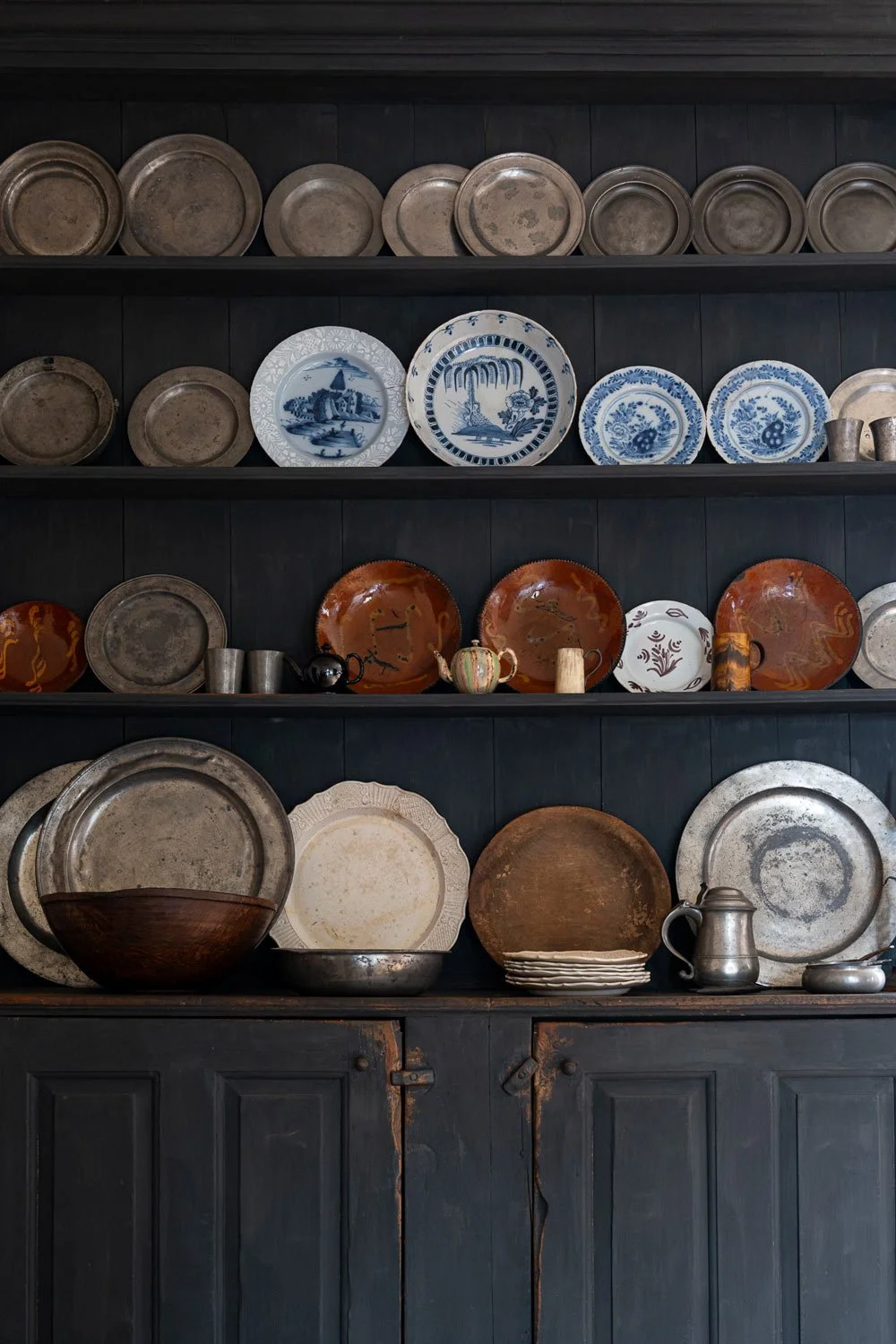
"Cupboard," ca. 1755 with shelves ca. 1939, pine with blue paint. Standard kitchen furnishings included a large cupboard with a lower case and open shelves for the convenient storage of English pewter, English delftware, stoneware, and other pottery, and American redware for baking and serving.

Kitchen fireplace with original crane and 18th-c. roasting spit. Original bake oven is visible at left rear.
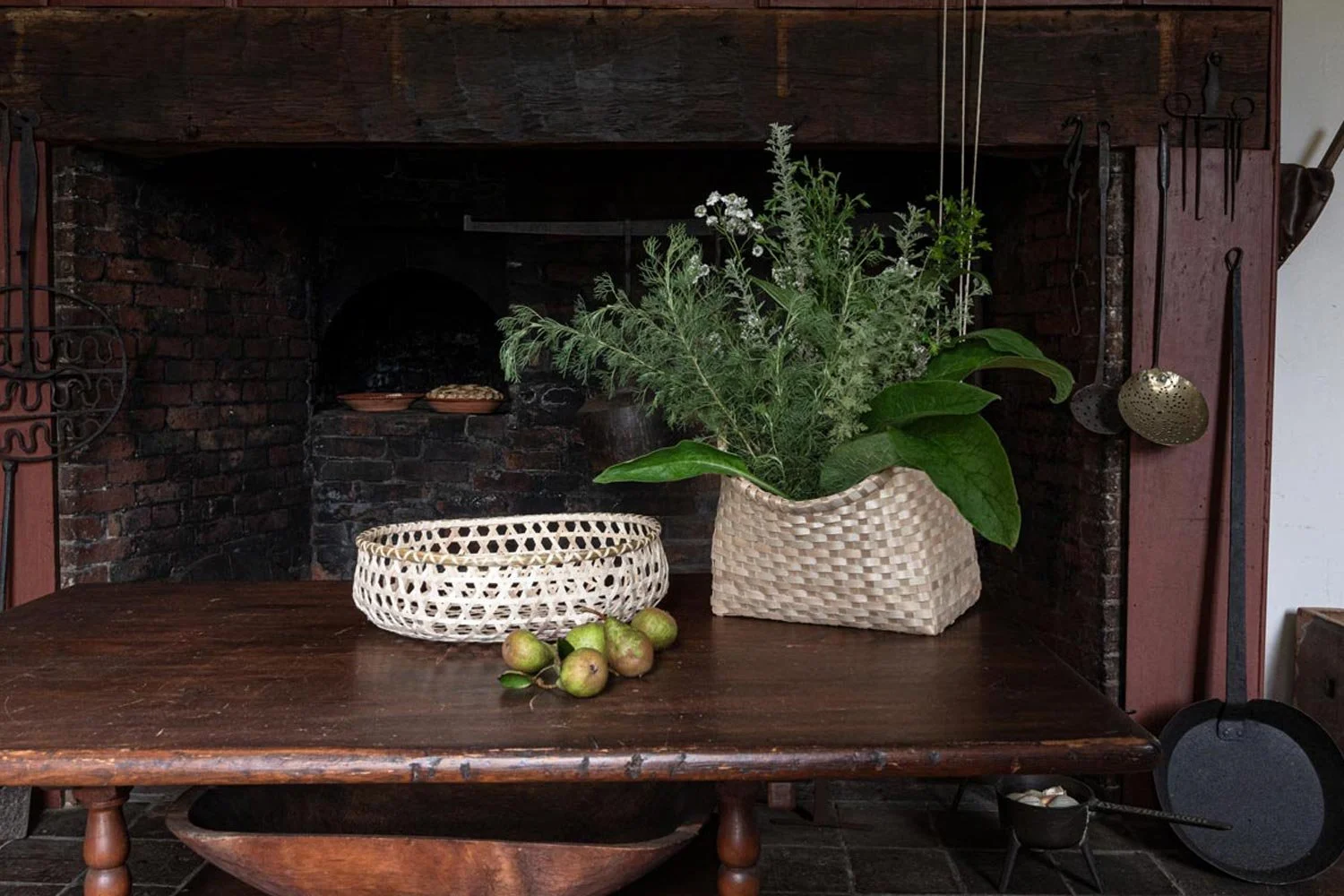
Peter Neptune and Debora Nicholas, Passamaquoddy, "Baskets," 2022, ash. Members of the Maine Wabanaki Basket Makers Alliance, Neptune and Nicholas recreated historic forms. Woven splint baskets, made for millennia by the Indigenous tribes in what is now Maine, were important trade items. In colonial households, they were convenient for collecting garden herbs and produce, and for food preparation and storage.
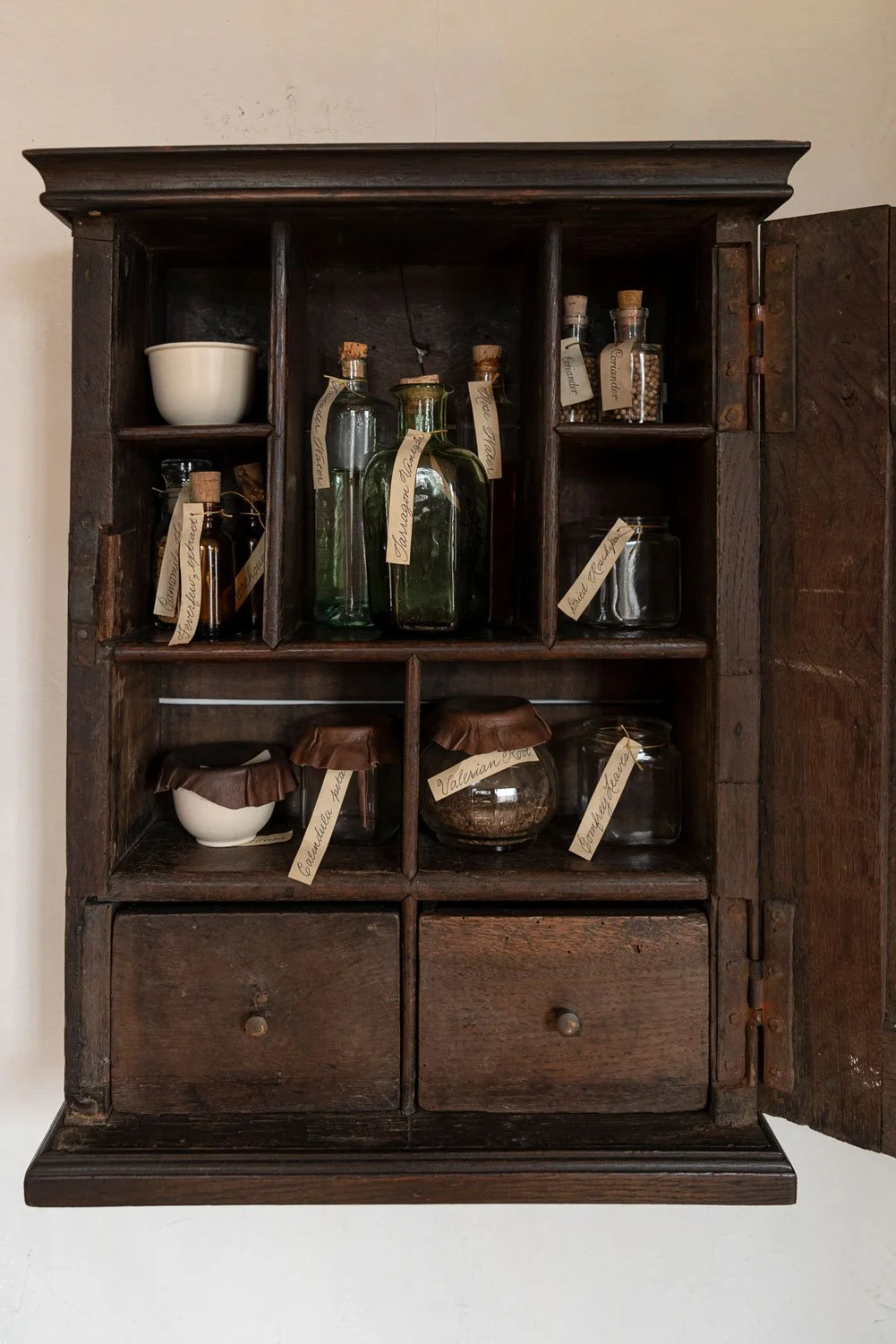
"English Wall cupboard," ca. 1720, oak. This small cupboard with interior drawers and shelves provided handy storage for spices or medicinal herbs. The door could be locked to safeguard rare, imported spices, such as nutmeg and cinnamon.
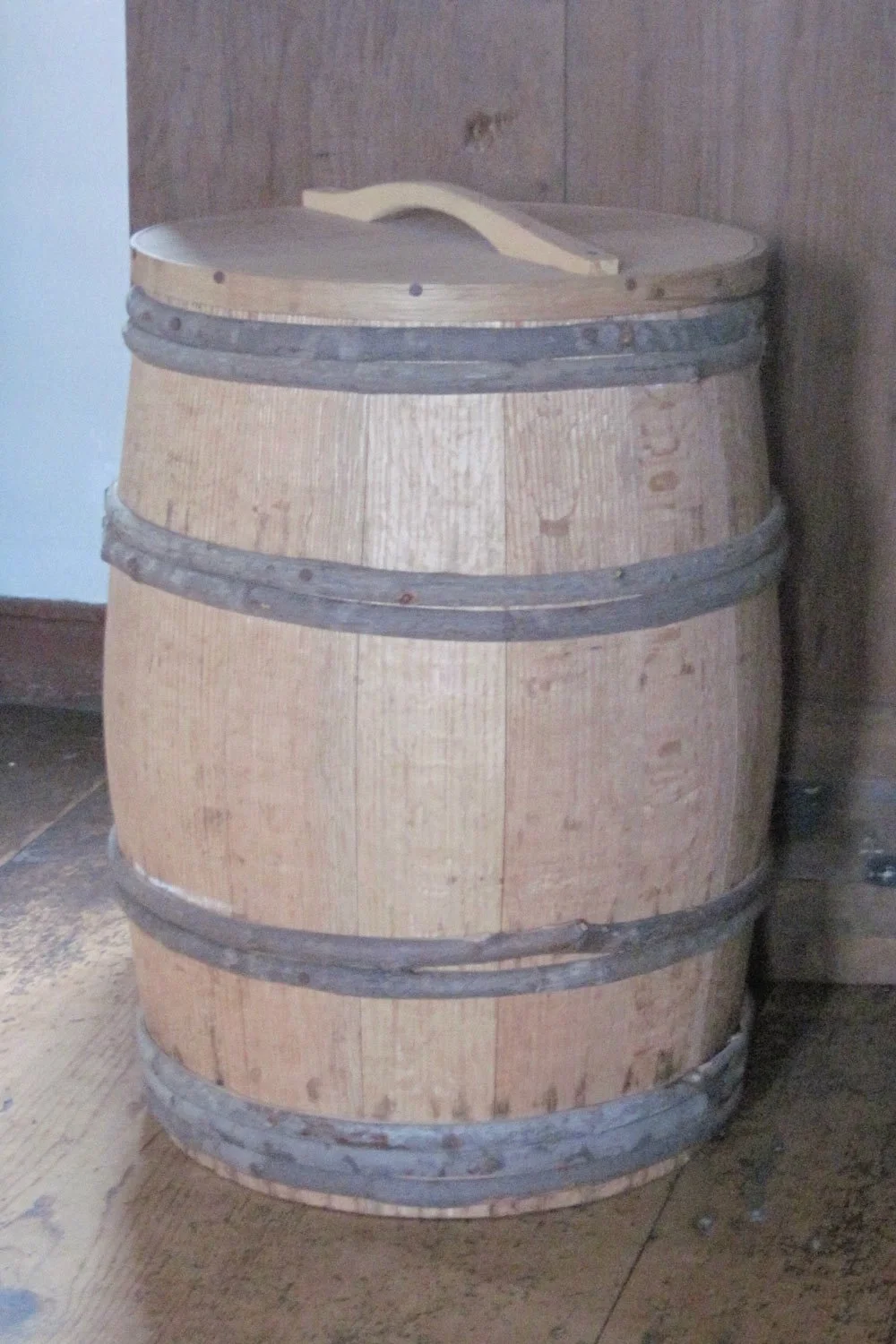
"Barrels" were used for household food storage. This is one of several coopered objects reproduced by Ron Raiselis Cooperage in 1993.
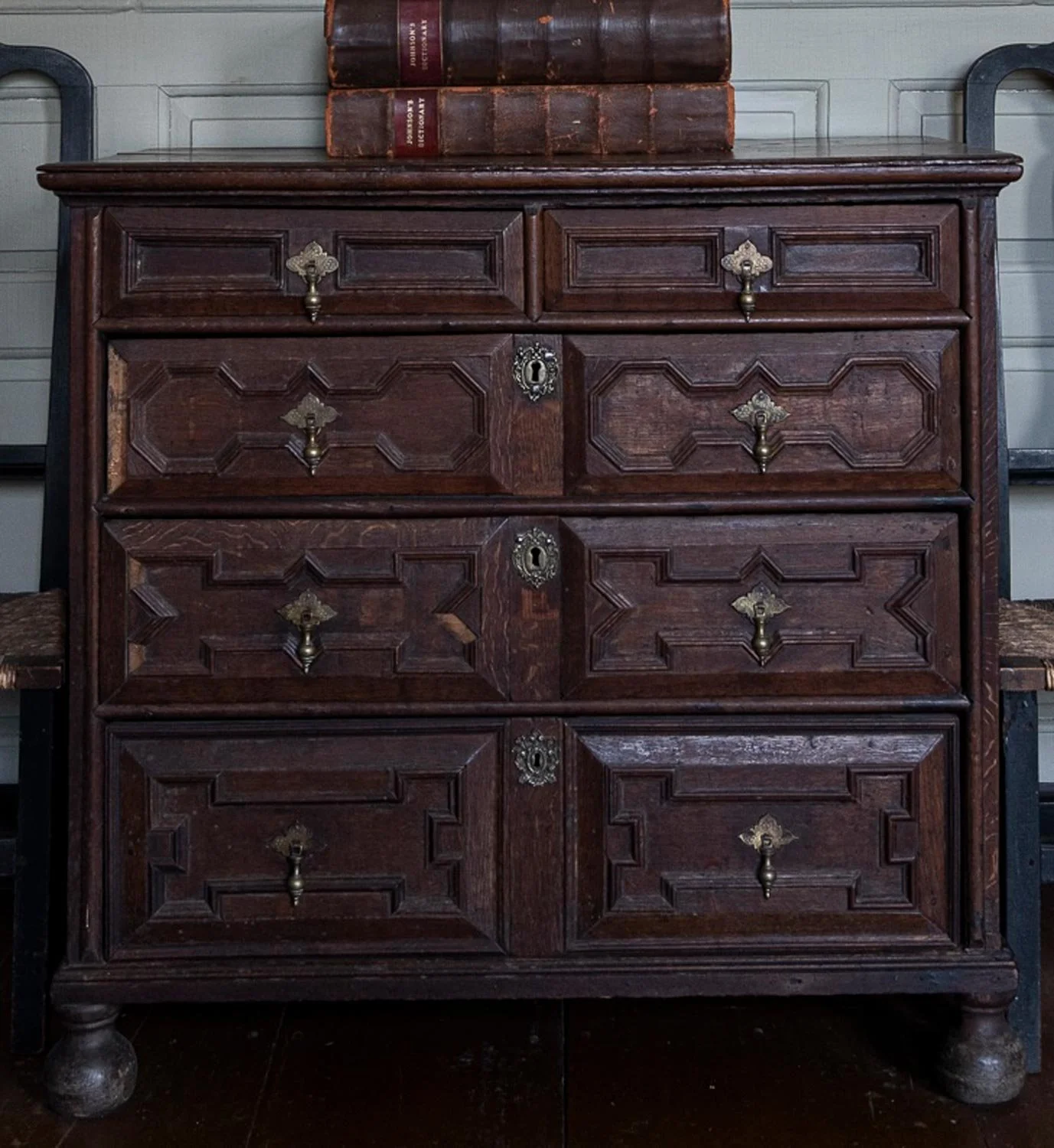
"English Chest of Drawers," ca. 1740 with Samuel Johnson's "Dictionary of the English Language," 2 vols., published in London in 1760.
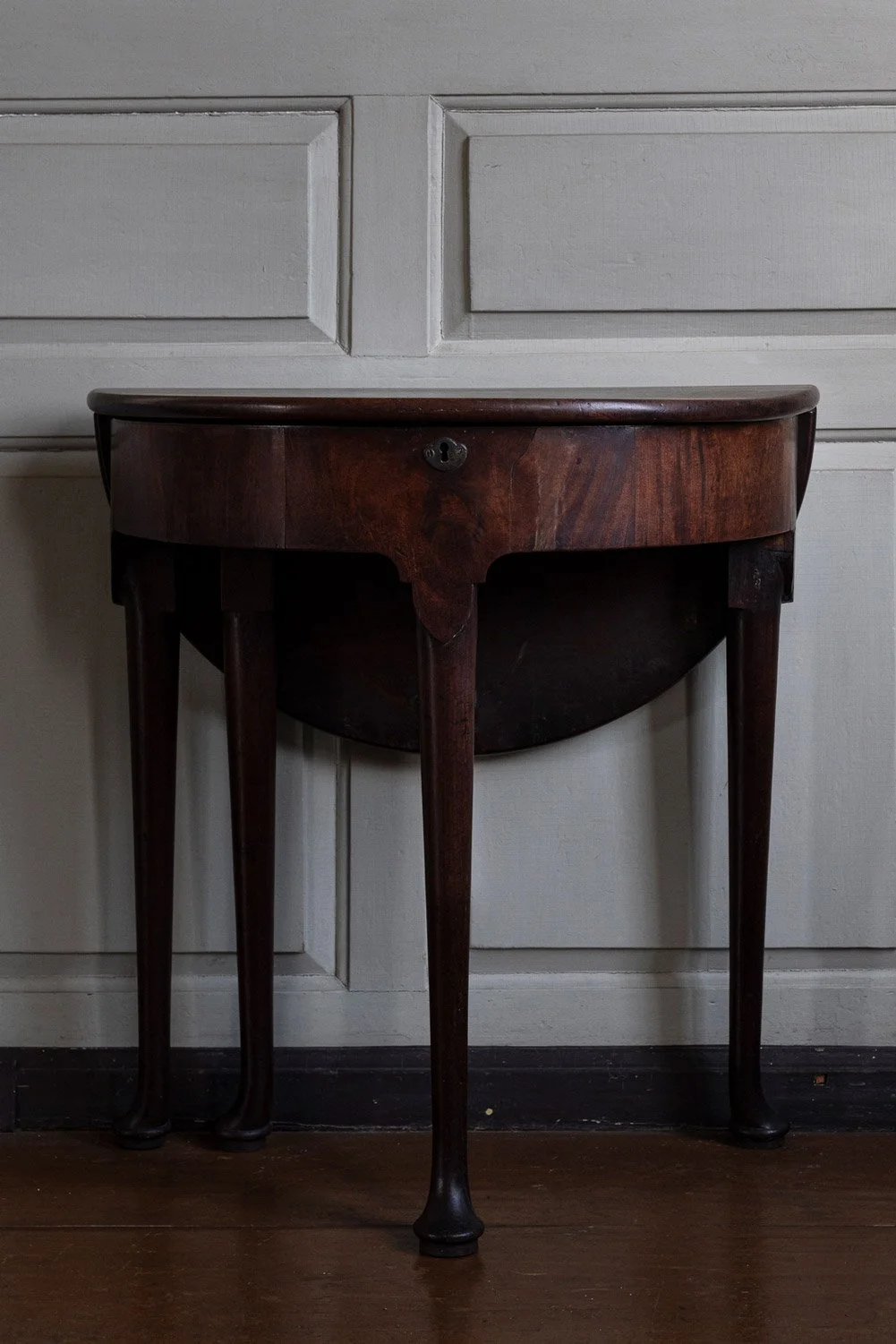
"English Tea table," ca. 1740. This is an elegant example of small and portable household furniture. Its drum-shaped compartment created convenient storage; the leaf could be closed, and the table set against the wall when not in use.
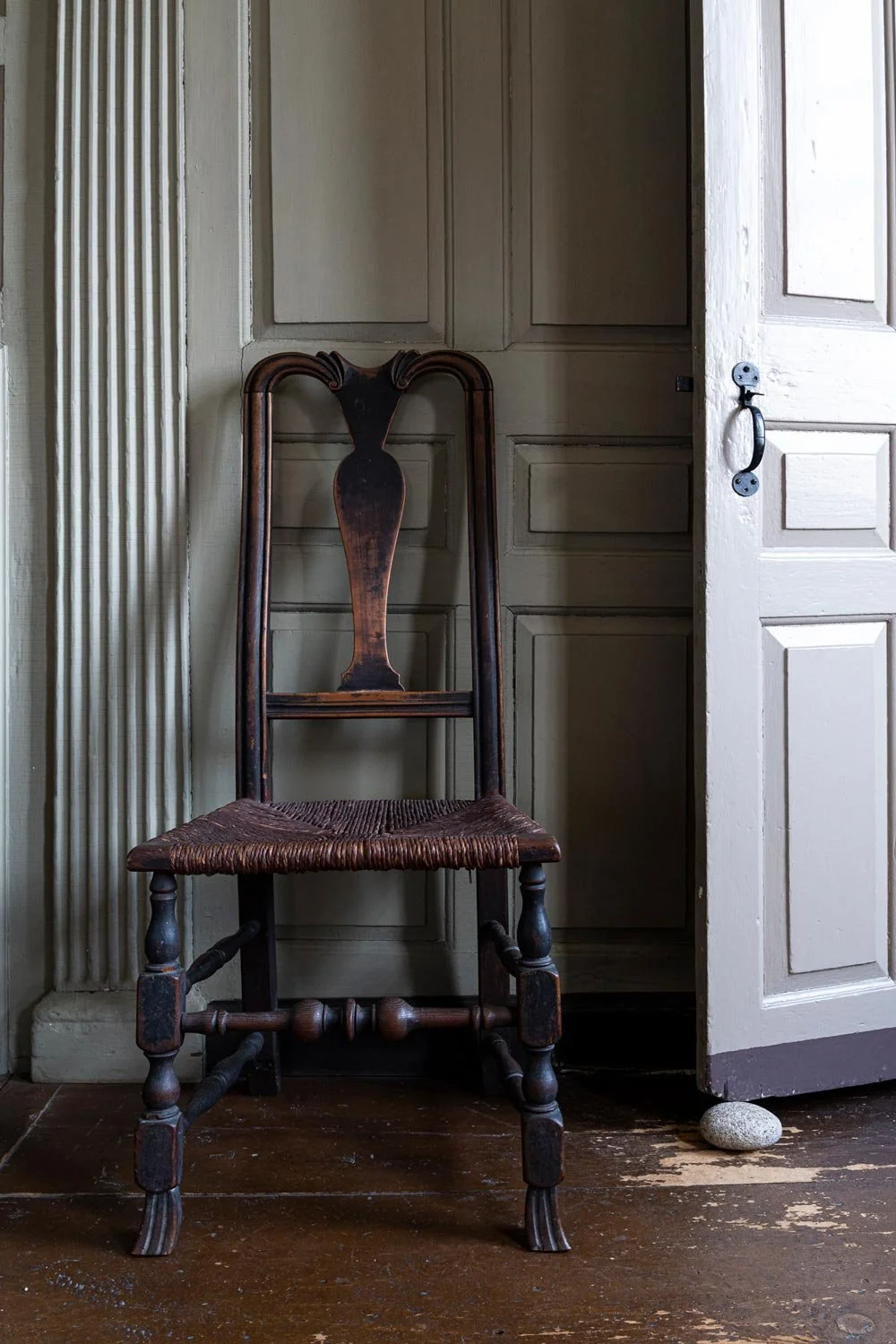
"New England Side chair," ca. 1730-50. With its scrolled crest rail, baluster splat, bold turned stretchers, and distinctive carved feet, this side chair would have been part of a larger set of 4, 6, or 8 chairs for dining. Made of ash and pine, it retains its original stain in imitation of a darker, more desirable wood, such as local black walnut or exotic imported mahogany.
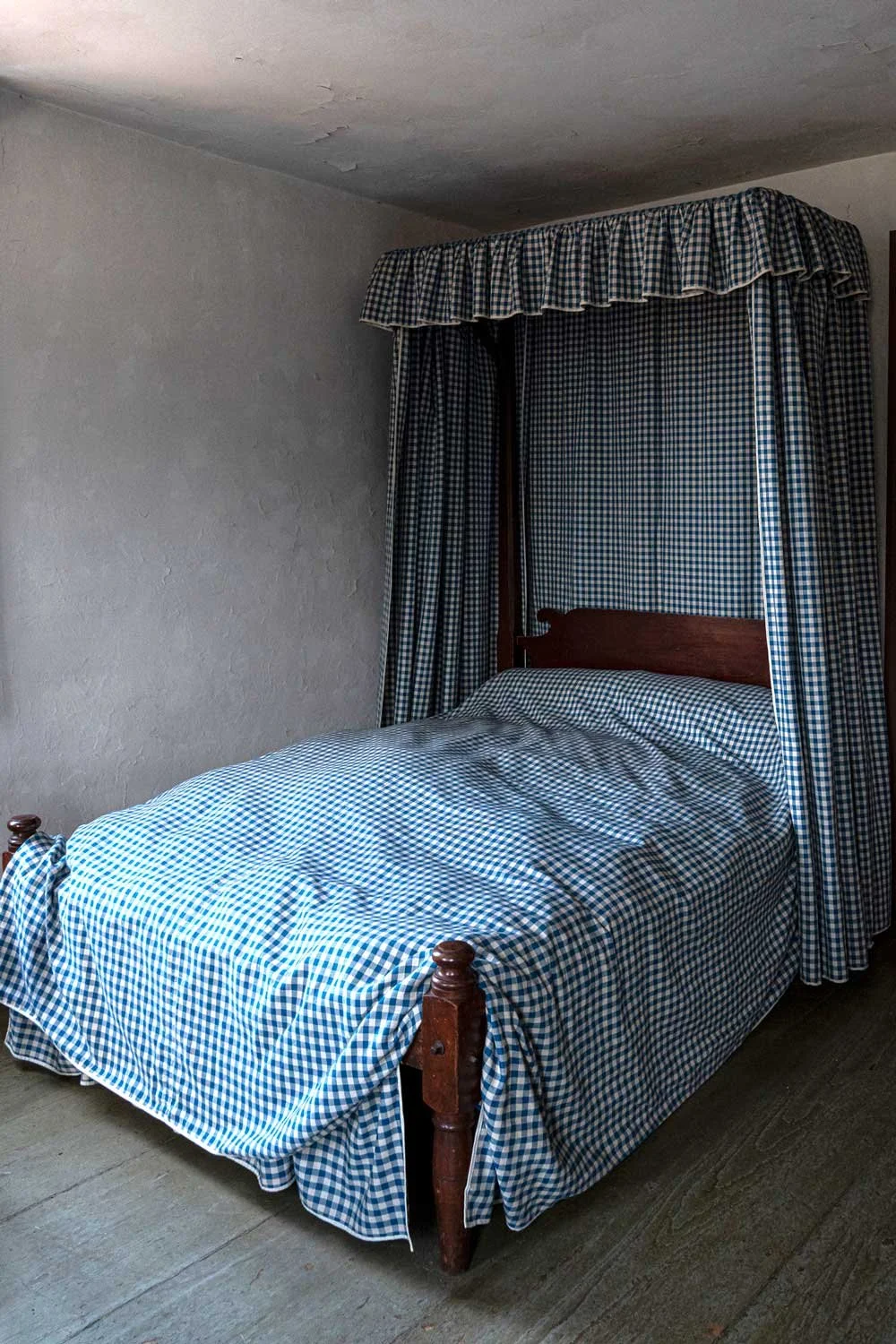
"Quarter-tester bed," ca. 1770. This form offered convenience and flexibility. Hinged at the headboard, its frame could be lifted, and the curtains closed around it to hide the frame. With the bed set against the fall, the room offered additional space for other activities.
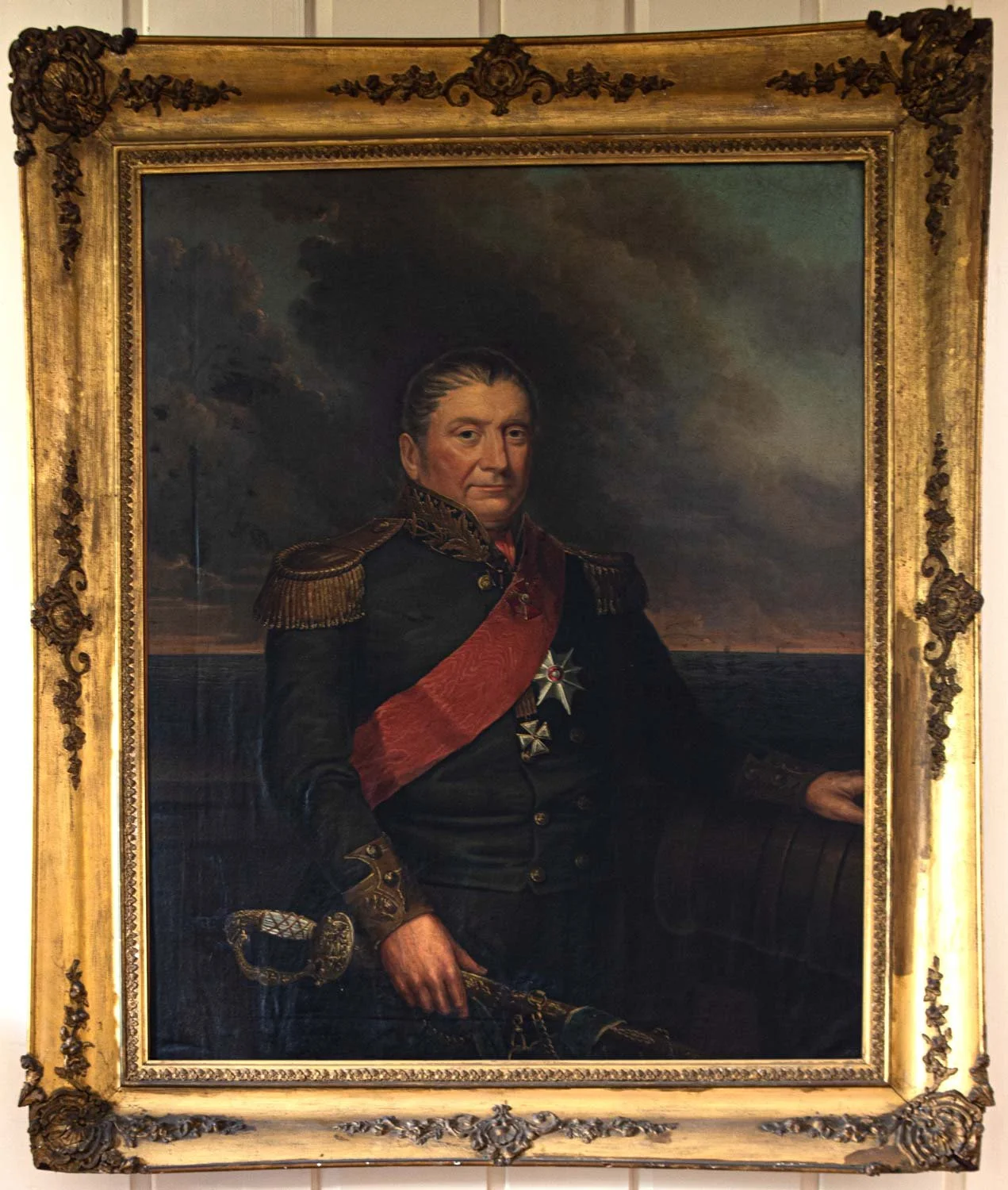
C. O. Cole, "Admiral George Tate," ca. 1853, oil on canvas. George Tate II (1746-1821) served as a lieutenant in the Royal Navy in 1770 before joining an elite group of English officers in Catherine the Great’s Russian Navy. He rose through the ranks to admiral. Portland's Tate-Ingraham family commissioned the local artist C. O. Cole with this portrait. He based it on an ivory miniature of ca. 1795 by the British artist William Naish, then owned in the family.